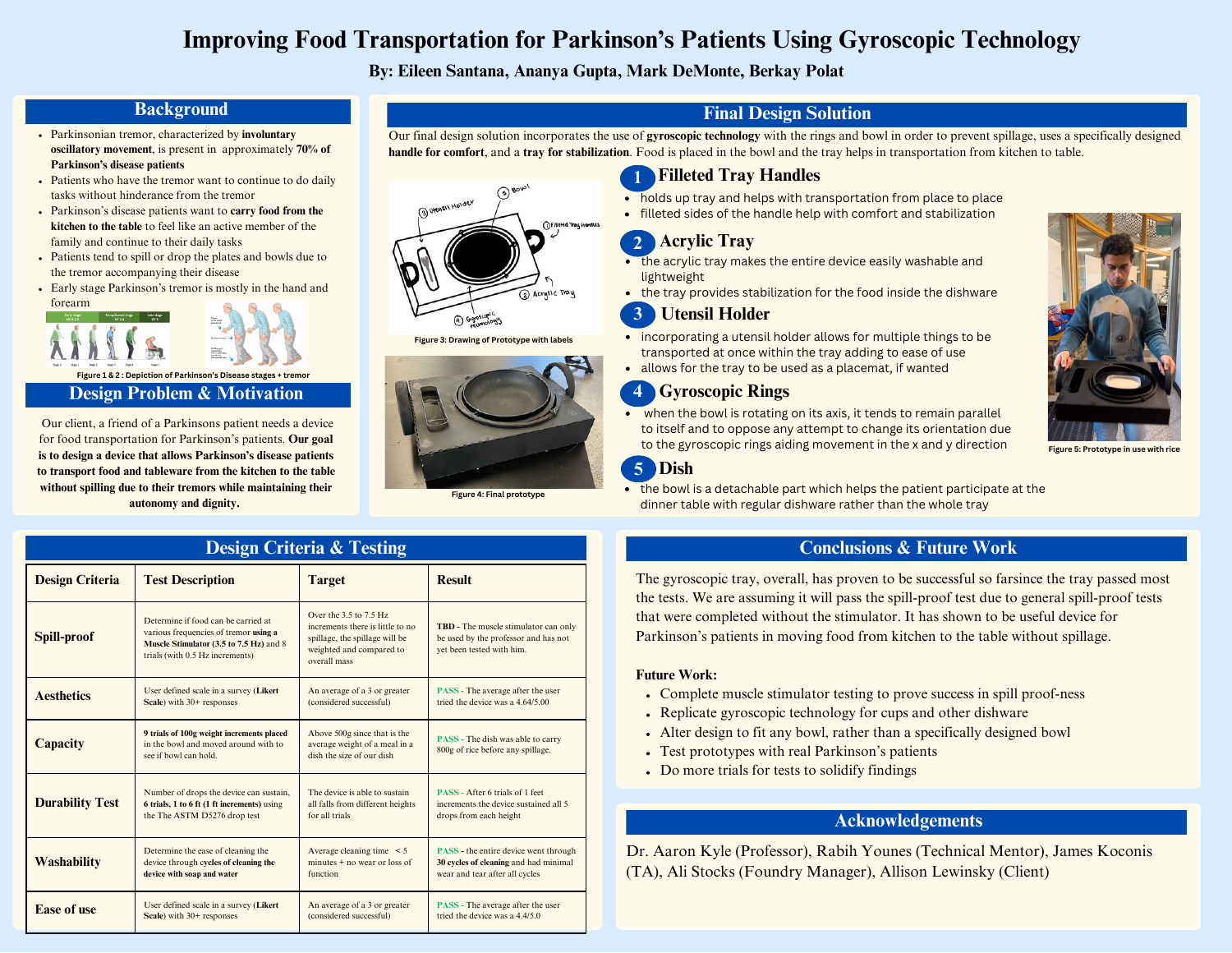
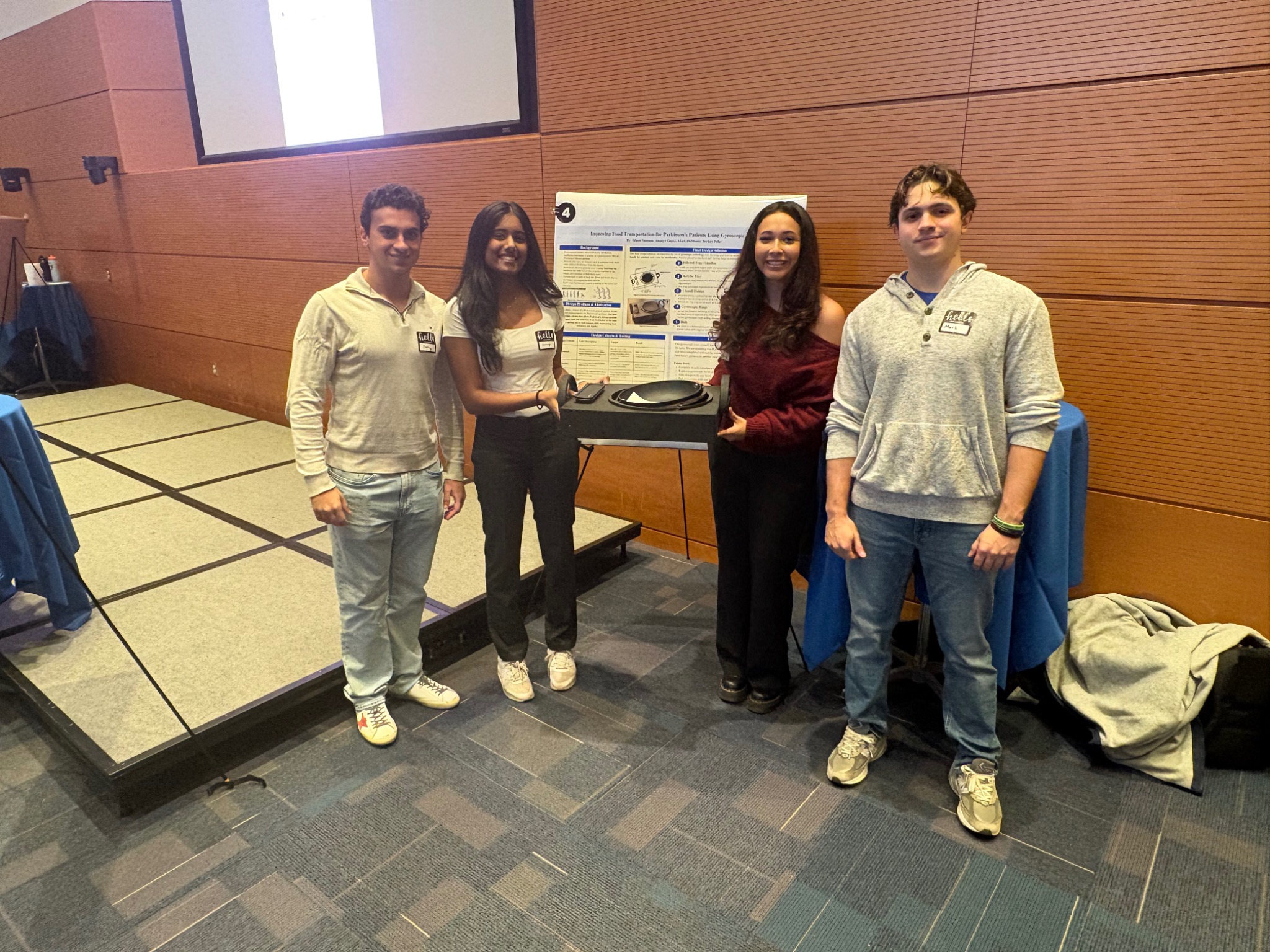
A functional prototype for steadier food transport
The Design Problem
Our four-person EGR 101 team designed a food-transportation device for people with Parkinson’s tremor. The goal was to help someone carry food and tableware from the kitchen to the table with less spillage and greater independence.
My Role
Engineering Team Lead Mechanical design and prototyping Acrylic laser fabrication
Functional tray-and-bowl prototype Design and test results documented in the team poster
How the Prototype Worked
The design combined a supporting acrylic tray with a bowl held in nested rings. The ring assembly allowed movement in the x and y directions relative to the tray, aiming to keep the bowl steadier as the device was carried. This was a mechanical design, with no electrical stabilization system.
Acrylic Tray and Frame
A lightweight, washable support for carrying the bowl and tableware. I laser-cut the box frame from acrylic.
Nested Rings
A movable ring-and-bowl assembly intended to accommodate changes in orientation during transport.
Filleted Handles
Rounded handle edges designed for comfort and stable carrying.
Detachable Bowl
A removable dish so the user could eat from regular dishware at the table.
Utensil Holder
Space for transporting utensils with the meal and using the tray as a placemat.
My Design and Fabrication Work
I led the team through design reviews, prototype development, and progress presentations. I also used Adobe Illustrator and the Trotec Speedy 300 at The Foundry to laser-cut the box frame from acrylic, connecting the digital design with the physical build.
The team’s poster documented capacity, aesthetics, ease of use, washability, and durability testing. These were prototype-level results rather than clinical evidence.
800 gRice carried before spillage in the reported capacity test
4.64 / 5Reported aesthetics rating after users tried the device
4.4 / 5Reported ease-of-use rating after users tried the device
The poster reported minimal wear after 30 cleaning cycles. Its survey-based criteria used more than 30 responses, and durability was reported as passing the team’s drop tests.
Tremor-Simulation Testing
We tested the prototype under simulated tremor, as shown in the demonstration footage below. This extended the evaluation beyond the capacity, cleaning, durability, and usability checks documented in the poster.
Further Development
Further development could include additional trials and adapting the design for other bowls and cups. The completed simulation evaluated the prototype under tremor-like motion.